Posts

Pakistan’s polio fight falters — Part 1: The data and the warning signs

Image
As Sindh reports rising virus circulation and positive sewage samples, specialists urge evidence-based reforms, better accountability, and investment in water, sanitation, and primary healthcare (Originally published in Social Track , a weekly from Karachi, this two-part report dives into the persistence of poliovirus in Sindh and across Pakistan — despite years of eradication efforts.) By Mukhtar Alam  KARACHI: With Pakistan remaining one of only two polio-endemic countries—alongside Afghanistan—the situation in Sindh has raised fresh concern among medical experts and public health observers. Over the 11 months since July 2024, the province has reported 25 new cases of paralytic polio in children and 272 environmental samples testing positive for the virus—an alarming indicator of what experts describe as the “suboptimal performance” of the province’s polio eradication programme. According to official data, Pakistan has recorded 12 cases of wild poliovirus type 1 (WPV1) so ...

Officials acknowledge plight of Hyderabad mental facility

Image
SHRC urges multi-sectoral action as abandoned patients and resource gaps strain Sindh’s largest mental health facility HYDERABAD: During a high-level visit to Sindh’s largest mental health facility in Hyderabad -- Sir Cowasji Jehangir Institute of Psychiatry -- officials acknowledged major gaps in psychiatric staffing and patient rehabilitation as well as security concerns. Medical Superintendent Dr Nisar Ahmed Soho flagged the growing burden of long-recovered but abandoned patients, while Sindh Human Rights Commission (SHRC) Chairperson Iqbal Ahmed Detho called for introducing multi-agency coordination and rights-based reforms to ensure continued care and dignity for the province’s mentally ill population. MS Dr Soho highlighted the plight of the abandoned long-recovered patients, particularly elderly men and women, who are reportedly left behind due to lack of guardianship. He also raised concerns over critical shortages of trained psychiatric personnel and overstretched hospital...

Call for tailored financing to expand decentralised energy access

Image
New global report urges stronger support to reach 666 million people still without electricity, mostly in rural and vulnerable communities. KARACHI: A new global report has called for urgent, tailored financial support to expand decentralised renewable energy in developing countries, warning that 666 million people — mostly in rural and vulnerable communities — still lack basic access to electricity. The Tracking SDG 7: The Energy Progress Report 2025 , released on June 25 by a consortium of international agencies, shows that while electricity access has grown to cover nearly 92% of the world’s population, the pace remains too slow to achieve universal access by 2030. Clean cooking access fares worse, with 2.1 billion people still relying on harmful fuels such as firewood, charcoal, and kerosene — contributing to serious health and environmental risks. The report highlights decentralised renewable energy — including mini-grids, solar home systems, and off-grid clean cooking tech...

Karachi reports fourth Naegleria death in 2025—but who’s keeping count?

Image
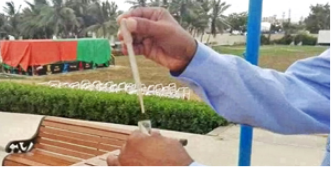
Despite recurring deaths from a brain-eating amoeba, Karachi’s water safety response remains patchy, reactive—and disturbingly quiet. *SITUATIONER* By Mukhtar Alam KARACHI: Karachi has now reported its fourth death of the year attributed to Primary Amoebic Meningoencephalitis (PAM)—an often-fatal infection caused by the brain-eating amoeba Naegleria fowleri . The latest victim, a 17-year-old boy from North Karachi, passed away at a private hospital on June 28. Health officials confirmed the cause and recorded the death a day before, on June 27. What makes this case particularly troubling is that the teenager, a student, had no known history of swimming, visiting recreational water bodies, or even regular ablution—commonly flagged as risk factors. And yet, beyond the formality of health department confirmation and a few routine updates on social media, the public narrative barely budged. As is often the case, many journalists—myself included—felt some closure once the official machin...

PMA slams new MDCAT rules as unfair, regressive

Image
IV Report KARACHI: The Pakistan Medical Association (PMA) has criticised the recent decisions announced by the Pakistan Medical and Dental Council (PMDC) regarding the Medical and Dental College Admission Test (MDCAT), calling them ill-conceived, flawed, and harmful to the future of the country’s healthcare workforce. According to a PMDC notification issued earlier this month, starting from the 2025–26 academic session, candidates seeking admission to MBBS and BDS programmes will only be permitted to sit for the MDCAT within their own province or region, based on domicile. In addition, applicants must now secure a minimum of 65% marks in FSc (Pre-Medical) or an equivalent qualification to be eligible. In a statement issued on June 25, PMA Secretary General Dr Abdul Ghafoor Shoro urged the PMDC to immediately withdraw the newly introduced criteria and initiate broader reforms in the medical admissions process. He warned that the new measures risk excluding deserving students and fu...

Syphilis among blood donors ‘on the rise’ in Sindh

Image
Experts urge stronger screening, public awareness, and policy action By Mukhtar Alam KARACHI: A report by the Sindh Blood Transfusion Authority (SBTA) has raised alarm over significant prevalence of syphilis among blood donors across the province as the 2024 data shows 1.16% of the total 10,851 screened donors tested positive for the sexually transmitted infection. The highest infection rate was recorded at the Regional Blood Centre (RBC) in Sukkur (2.7%), followed by Shaheed Benazirabad (2.5%), and Jamshoro and Karachi (1.6% each). Overall, the SBTA recorded 13,800 transfusion-transmitted infections (TTIs) among voluntary and replacement donors in 2024 — a drop from 18,414 cases in 2023. Despite the decline, syphilis cases increased proportionally -- 25.48% of all TTIs, up from 24.39% the previous year. Other TTI rates included hepatitis C (1.9%), hepatitis B (1.5%), HIV (0.1%), and malaria (0.1%). Keen observers are worried that the data highlights potential gaps in scr...

PMA warns budget cuts threaten stability of healthcare system

Image
IV Report KARACHI: The Pakistan Medical Association (PMA) has criticised the federal government’s proposed budget for the upcoming fiscal year, expressing alarm over what it calls a “massive setback” for the country’s already struggling healthcare system. In a statement issued on June 12, the PMA expressed deep disappointment at the significant reduction in federal health sector funding, following the presentation of the 2025-26 budget in the National Assembly and Senate on June 10. “The government has chosen to inflict a significant blow to our already struggling healthcare system,” the statement read. “We are facing a substantial 16% cut in the federal health budget.” The overall allocation for the Ministry of National Health Services, Regulations, and Coordination (NHSR&C) has been slashed from Rs 54.87 billion in the outgoing fiscal year to Rs 46.10 billion for the next year. Dr Abdul Ghafoor Shoro, Secretary General of PMA (Central), highlighted the most alarming aspec...